Explore Scotland
Scottish Glens
Glen-by-glen guides: the road in, where to park, which hills are accessed from there, and what each valley is actually like. 31 glens covered, each with detailed road notes, parking, nearby Munros, bothy approaches, midge severity and what kind of trip the glen actually suits.
The Scottish Highlands are organised by glen: every Munro round starts at the road end of one, every bothy approach walks up one, and almost every Highland village sits at the mouth of one. Picking the right glen for your trip is the single biggest decision in planning a Scottish walking weekend — single-track road access changes the drive time by an hour, midge severity changes the camping window by a month, and motorhome-friendliness changes the accommodation cost entirely.
31
Glens reviewed
7
Motorhome-friendly
16
Single-track access
5
Foot/track only
3.3/5
Avg midge severity
Lochaber
Region guide →
Glen Coe
Lochaber · 16km
Scotland's most dramatic glacial glen — dark history, serious ridges, and the constant weight of big mountains on every side.

Glen Nevis
Lochaber · 14km
The glen under Britain's highest mountain — a gorge walk, a wire bridge, a 120m waterfall, and a 7-hour slog to the top.

Glen Etive
Lochaber · 19km
Nineteen miles of single-track dead end — river pools, Skyfall scenery, and midges that will eat you alive if you stop moving.

Glen Roy
Lochaber
The Parallel Roads National Nature Reserve — three glacial lake shorelines etched into the hillsides like contour lines drawn by giants.
North-West Highlands
Region guide →
Glen Affric
North-West Highlands · 20km
Ancient Caledonian pines, clear lochs and high Munros — the finest combination of forest and mountain in the Highlands.
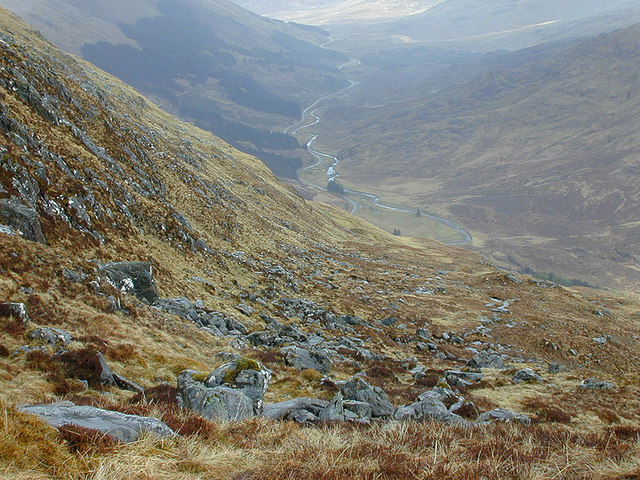
Glen Shiel
North-West Highlands · 16km
The A87 to Skye cuts through a glen with five Munros on one side and a battlefield on the other — accessible, dramatic, and often overlooked.

Glen Cluanie
North-West Highlands · 12km
The continuation of Glen Shiel east of Cluanie Inn — Loch Cluanie reservoir with the Cluanie horseshoe to the north and the South Cluanie Ridge to the south.

Glen Cannich
North-West Highlands
A hydro-dammed glen west of Cannich — the reservoir drowned one of the northwest's finest wild glens, but the Munro ridge above the north shore remains remote and rarely crowded.
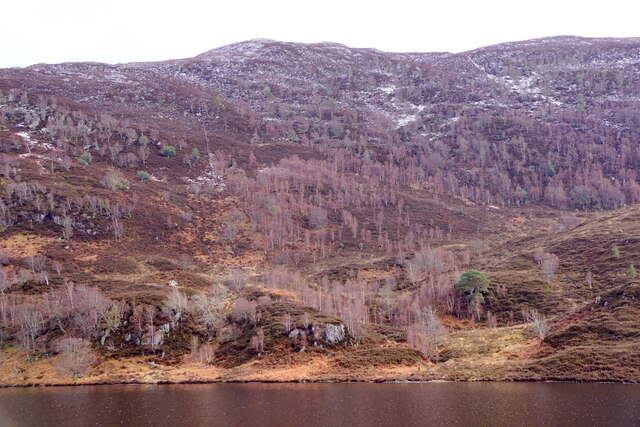
Glen Strathfarrar
North-West Highlands
Scotland's most restricted glen — a locked gate at Struy limits car access to specific hours, which has inadvertently preserved native pinewoods and four excellent Munros almost no one visits.

Glen Lichd
North-West Highlands
The foot-only approach to the south side of the Five Sisters — what the standard A87 viewpoint doesn't show you, and the classic through-route to Glen Affric via Camban bothy.
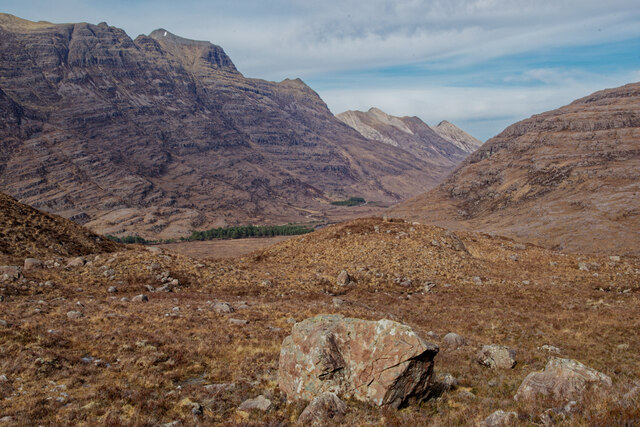
Glen Torridon
North-West Highlands
Torridonian sandstone and ancient quartzite — the oldest mountains in Britain and some of the finest walking in the northwest.

Glen Carron
North-West Highlands
The Lochcarron approach glen — a broad Highland valley with a railway, an A-road, and Munros on both sides.

Strath Glass
North-West Highlands
The Chisholm clan heartland, cleared of almost its entire population between 1801 and the 1830s — the broad strath you drive through to reach Glen Affric has a history worth knowing.
Cairngorms
Region guide →
Glen Feshie
Cairngorms · 18km
Rewilding in action — reduced deer, returning pines, and a braided river through the southern Cairngorms that looks different every time you visit.
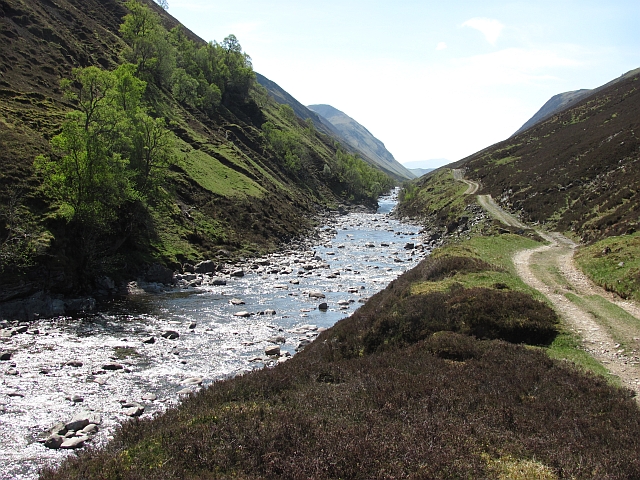
Glen Tilt
Cairngorms · 24km
A legal right-of-way forged in an 1847 court case — the historic through-route from Blair Atholl to Braemar through some of the most remote terrain in the southern Highlands.

Glen Clova
Cairngorms
The finest of the Angus Glens — quieter Munros, better skies, and a hotel at the end of the road that has been serving hillwalkers since the Victorian era.

Glen Doll
Cairngorms
A Forestry Scotland glen at the head of Glen Clova — the start of Jock's Road, the most contested right-of-way in Scottish history.

Glen Esk
Cairngorms
The most easterly and most agricultural of the Angus Glens — an approachable introduction to eastern Cairngorms walking with good Pictish history nearby.

Glen Lui
Cairngorms
The Caledonian pine approach to the Cairngorm plateau — ancient trees, Derry Lodge ruins, and the southern gateway to Ben Macdui.

Glen Quoich
Cairngorms
The hidden glen beside Glen Lui — the Punch Bowl gorge that most Linn of Dee visitors walk straight past, and a glen named, in Gaelic, after the very feature they miss.

Glen Tanar
Cairngorms
One of the better-managed Caledonian pinewoods on Deeside, an ancient trans-Cairngorm road still walkable today, and the most easterly Munro approached from the south.
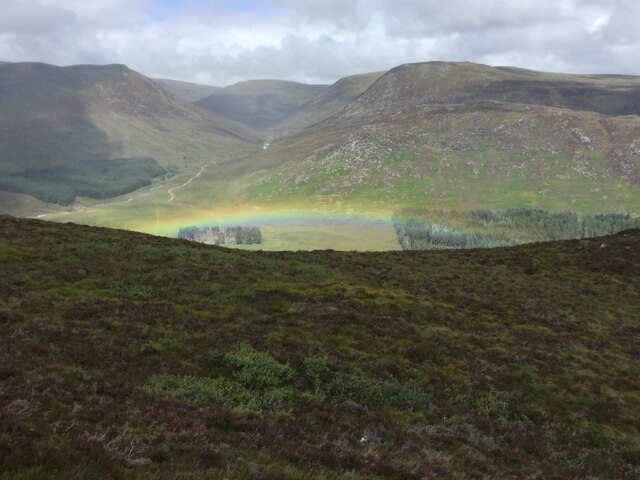
Glen Banchor
Cairngorms
Three Monadhliath Munros starting 1km from Newtonmore train station — the most genuinely car-free Munro day in the Cairngorms National Park.
Skye & the Small Isles
Region guide →
Glen Brittle
Skye & the Small Isles · 10km
The Cuillin's back door — fairy pools at the entrance, serious gabbro peaks at the head, and midges that will find you in both places.

Glen Sligachan
Skye & the Small Isles · 9km
The glen that divides the Red and Black Cuillin — the most photographed bridge in Scotland at its entrance and one of the great wilderness walks at its far end.
Perthshire
Region guide →
Glen Lyon
Perthshire · 56km
Scotland's longest enclosed glen — 56 kilometres of single-track road, ancient trees, river pools, and the oldest yew tree in Europe at its entrance.

Glen Lochay
Perthshire
Three uncrowded Munros above a Perthshire glen shaped by drove roads, Campbell estates and a post-war hydroelectric scheme that runs through the mountain.
Loch Lomond & The Trossachs
Region guide →
Glen Falloch
Loch Lomond & The Trossachs
The A82 corridor north of Loch Lomond — Rob Roy cattle country, one of Scotland's oldest inns, a waterfall on the West Highland Way, and two Munros that earn their solitude.

Strath Fillan
Loch Lomond & The Trossachs
The upper Tyndrum strath on the West Highland Way — a broad valley with a West Highland Line station and Munros on both sides.
Argyll
Region guide →
Glen Rosa
Argyll
A sea crossing, a 3km walk, and then granite mountains above a glacial trough — the most complete mountain day reachable from Glasgow without a car.
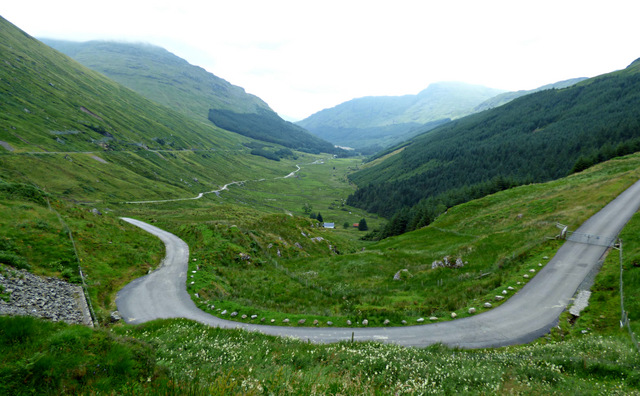
Glen Croe
Argyll
The A83 summit pass where exhausted soldiers carved "Rest and be Thankful" in 1753 — one of Scotland's most evocative road names, and a hillside that has been sliding onto that road ever since.

Scottish glens — common questions
- What is a Scottish glen?
- A glen is a long, deep valley in the Scottish Highlands — usually U-shaped from glacial action, often carrying a river or chain of lochs along the floor, and bounded by steep mountain walls on both sides. The word is from Gaelic gleann. Strath (Gaelic srath) is the related term for a broader, gentler valley — Strath Spey and Strath Carron are straths, not glens, despite being colloquially lumped in. Glens are the principal walking-access routes into the high mountain country: every Munro round in the Highlands starts at the road end of some glen.
- Can I drive a motorhome into a Scottish glen?
- Some yes, some no. Glens with main A-road or B-road access (Glen Coe, Glen Nevis, Glen Lyon, Glen Lochay) are fine for motorhomes. Glens with single-track road access (Glen Etive, Glen Affric, Glen Feshie, Glen Roy) are technically possible but slow and demanding — single-track roads in Scotland have passing places every 200-400m, and motorhomes hold up traffic disproportionately. The longer, more remote glens (Glen Tilt, Glen Quoich, Glen Lui) have no public road in at all — foot or bike only. Each glen page lists the road type and the editorial honesty of whether a motorhome makes sense.
- Can I wild camp in a Scottish glen?
- Yes, in most of them. Scotland's Land Reform Act 2003 gives you the legal right to camp on most unenclosed land, subject to the Scottish Outdoor Access Code: avoid enclosed agricultural ground, camp in small numbers, leave no trace, and pitch out of sight of houses where possible. The exception is the Loch Lomond & Trossachs Camping Management Zone, which restricts wild camping in marked sections of the park between March and September — those zones require a permit. None of the Highland glens covered here are inside a CMZ.
- Which Scottish glens are best for non-walkers?
- Glen Coe (drama from the roadside), Glen Lyon (24km of single-track through quiet country, with the Fortingall Yew at the mouth), Glen Affric (Caledonian pinewood loop walks from the Dog Falls car park), and Glen Trool (Forestry Commission paths in Galloway Forest Dark Sky Park) all reward day visitors who never leave easy ground. Glen Nevis has the Lower Falls and the Steall Falls bridge walk. For families with young kids, Glen Tanar in the Cairngorms has accessible forest tracks and ranger-led activities.
- When are midges worst in Scottish glens?
- Sheltered, humid evenings between late May and September are the highest-risk window for midges in any Highland glen. West-coast glens (Knoydart, Skye glens, Glen Sligachan, Glen Affric) are markedly worse than east-coast glens (Glen Tilt, Glen Lui, Glen Esk, Strath Glass). Each glen page lists a midge severity score; the bothy approach walks into the worst-affected glens between June and August can be genuinely brutal. Smidge + a head net are essential.