Glen
Glen Cannich
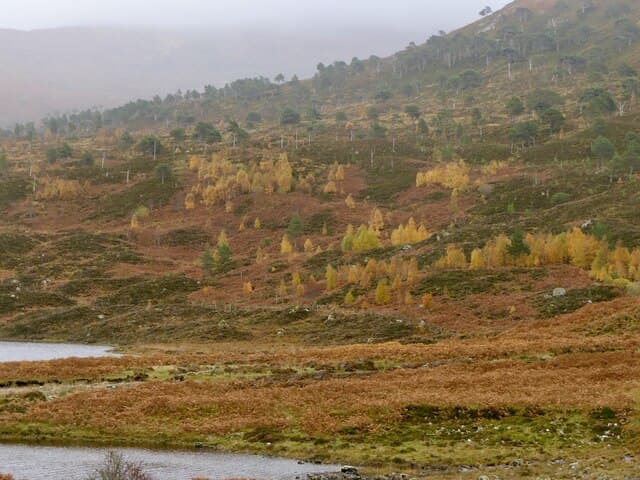
A hydro-dammed glen west of Cannich — the reservoir drowned one of the northwest's finest wild glens, but the Munro ridge above the north shore remains remote and rarely crowded.
- Munros
- 4
- Corbetts
- 1
- Grahams
- 2
- Highest peak
- Sgurr na Lapaich (1151.9m)
Glen Cannich runs west from the village of Cannich along the River Cannich to Loch Mullardoch — a 19km reservoir created when the Mullardoch dam was completed in 1951 as part of the North of Scotland Hydro-Electric Board's post-war expansion. The dam raised what had been a small natural loch into a reservoir that drowned the lower glen, submerging shielings, small farmsteads and what contemporaries described as one of the finest remote glens in the northwest Highlands. At low water, the stone walls of drowned buildings are occasionally visible at the reservoir margins.
Above the reservoir's north shore, the Mullardoch Munro ridge is one of the longest and most committing in the northern Highlands — An Socach (920m), An Riabhachan (1129m), Sgurr na Lapaich (1036m) and Carn nan Gobhar form a 20km+ circuit with over 1,700m of ascent. There is no shortcut and no low-level escape once committed. The ridge demands a long summer day and confident navigation — it is not a place to be caught in deteriorating weather.
The lower glen road is single-track for 12km from Cannich to the dam. The landscape has a particular character: the industrial concrete of the dam and the flat reservoir surface sit against the scale of the hills above in a way that feels neither wild nor domesticated. Most visitors pass through quickly. Those who stay have the Munro ridge largely to themselves.
The road in
Single-track road etiquette
Pull into passing places to let oncoming vehicles pass. Don't park in passing places. If a faster vehicle is behind you, pull over and let them past. Do not reverse at speed — wait in a passing place.
End of road
The road ends at the Mullardoch dam, 12km west of Cannich village. Beyond the dam is the 19km reservoir shore — accessible only on foot, with no path. The dam car park is the last point for vehicles.
Parking1 spot
Mullardoch dam car park
15 cars
Free
Rough track end. Gravel surface. The last point vehicle access is possible before the reservoir shore.
Hills from Glen Cannich4 Munros · 1 Corbetts · 2 Grahams
Carn Loch na Gobhlaig
716m
Toll Creagach
1053.7m
Beinn a' Mheadhoin
611.9m
Carn Fiaclach
457m
Carn nan Gobhar
992.3m
Sgorr na Diollaid
817.9m
Tom a' Choinnich (Tom a' Choinich)
1112.7m
Sgurr na Lapaich
1151.9m
Meall Innis an Loichel
390m
Creag Dhubh
539m
Beinn na Muice
693.8m
Beinn Dubh an Iaruinn
591m
Gravel cycling1 route nearby
What's in the glen
Loch Mullardoch
Loch Mullardoch is a 19km reservoir formed by the Mullardoch dam (1951), part of the Affric-Beauly hydroelectric scheme. It drowned the original lower glen, submerging shielings and farmsteads — at very low water levels, stone building remains are occasionally visible at the margins. One of the longest freshwater lochs in Scotland.
Mullardoch Munro ridge
The four Munros above the north shore of Loch Mullardoch — An Socach (920m), An Riabhachan (1129m), Sgurr na Lapaich (1036m) and Carn nan Gobhar — form one of the longest single-day Munro circuits in Scotland. The round is 20km+ with 1,700m of ascent and has no easy escape once committed. It is very rarely crowded. The ridge gives exceptional views west toward Knoydart and north toward Strathfarrar.
River Cannich
Our take
Glen Cannich is not a consolation prize for people who couldn't get a parking spot at Glen Affric. It is a harder, more committing day with a different character — the reservoir shore has a bleakness that Affric's pinewoods don't. If you want four Munros in the northern Highlands with genuine solitude and no one else on the ridge, Mullardoch delivers that reliably. Just plan for a full long day — this ridge is further and more sustained than it looks on the map, and turning back halfway is not a simple option.
History
The Mullardoch dam was completed in 1951 as part of the Affric-Beauly hydroelectric scheme — one of the most ambitious post-war infrastructure projects in the Highlands. The North of Scotland Hydro-Electric Board, established in 1943 with an explicit mandate to develop Highland water power for the benefit of Scotland as a whole, constructed a series of dams across the northern glens in the 1940s and 1950s. Glen Cannich was one of several glens transformed by this programme; nearby Glen Affric's Loch Benevean was raised by the same scheme.
The Mullardoch dam raised the water level of the original Loch Mullardoch by several metres, drowning the lower glen and the shielings and croft-style buildings that occupied it. The communities affected were small and the displacement largely unrecorded in public records — the Board operated under emergency post-war powers that gave little weight to objections from individual landholders or tenant farmers. The submersion of lower Glen Cannich attracted less public controversy than some Highland hydro schemes, partly because the area was already sparsely populated and partly because the economic urgency of post-war electrification dominated the political climate. At very low water levels, stone walls and building foundations are occasionally visible at the reservoir margins.
Practical
- Mobile signal
- Signal in Cannich village. None beyond the first few kilometres of the glen road.
- Midges
- High(4/5)
- Public transport
- Stagecoach bus to Cannich from Inverness. No public transport beyond the village.
- Dogs
- On lead — livestock or ground-nesting birds present.
Map
Hills (green), bothies (brown), parking (blue), wild swimming (light blue).
Nearby glens
Scotland outdoor updates
Route guides, condition reports and seasonal picks — once a month, no noise.
Glen Cannich — common questions
- How's the drive into Glen Cannich?
- Single-track with passing places. The road ends at the Mullardoch dam, 12km west of Cannich village. Beyond the dam is the 19km reservoir shore — accessible only on foot, with no path. The dam car park is the last point for vehicles.
- Can you drive a campervan into Glen Cannich?
- Yes, motorhomes and campervans manage Glen Cannich fine. Drive single-track sections with care and pull into passing places to let local traffic through.
- Will midges be a problem in Glen Cannich?
- We rate Glen Cannich 4/5 for midges — severe between late May and September. Still, humid evenings are peak biting time; wind and height are your friends. Pack Smidge and a head net from May.
- Is it legal to wild camp in Glen Cannich?
- Yes. Under the Land Reform Act 2003 you can wild camp on most unenclosed land in Scotland, provided you follow the Scottish Outdoor Access Code — keep off enclosed farmland, camp in small groups, and leave no trace. Glen Cannich sits outside the Loch Lomond and Trossachs Camping Management Zones, so the March-September permit restrictions there don't apply here.
- How do I reach Glen Cannich by public transport?
- Stagecoach bus to Cannich from Inverness. No public transport beyond the village.