Glen
Glen Feshie
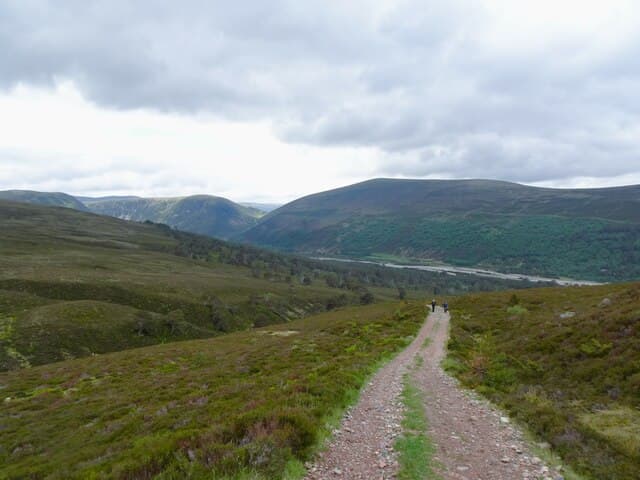
Rewilding in action — reduced deer, returning pines, and a braided river through the southern Cairngorms that looks different every time you visit.
- Length
- 18km
- Munros
- 3
- Corbetts
- 3
- Bothies
- 1
- Highest peak
- Sgor Gaoith (1116m)
Glen Feshie is what the Cairngorms could look like. Since Anders Povlsen's Wildland Ltd acquired Glenfeshie Estate in 2006, deer numbers have been reduced from unsustainable levels to around 5 per km², and the result is visible on every hillside: birch, rowan, Scots pine and aspen are regenerating naturally across ground that was bare open moorland a decade ago. The contrast with over-grazed land on the adjacent estates is instructive and stark. This is Europe's most significant rewilding project at estate scale.
The glen runs south from Feshiebridge to Auchlean, where the road ends and a track continues into the high Cairngorms. Beyond Auchlean, the through-route to Glen Tilt via the Geldie Burn and the Linn of Dee is a classic multi-day traverse — 30km one way, requiring an overnight in a bothy. The upper River Feshie has a braided river channel unusual in Scottish rivers: multiple channels split and rejoin across a wide gravel bed, shifting after flood events. It is one of the most dynamic river landscapes in the Cairngorms.
The road in
Single-track road etiquette
Pull into passing places to let oncoming vehicles pass. Don't park in passing places. If a faster vehicle is behind you, pull over and let them past. Do not reverse at speed — wait in a passing place.
End of road
Auchlean farmstead. A track continues beyond on foot. The Feshie-Geldie through-route to Glen Tilt is a classic multi-day walk.
Parking2 spots
Feshiebridge
20 cars
Free
Auchlean
10 cars
Free
Hills from Glen Feshie3 Munros · 3 Corbetts
Bothies in the glen1 in range
What's in the glen
Glenfeshie Estate rewilding
Glenfeshie Estate is one of Europe's most significant rewilding projects. Since Anders Povlsen acquired the estate in 2006, deer numbers have been reduced from 100+ per km² to around 5 per km², allowing natural forest regeneration at a remarkable rate. Birch, rowan, Scots pine and aspen are regenerating naturally across hillsides that were bare moorland a decade ago. The contrast with over-grazed adjacent land is stark.
River Feshie braided section
The upper River Feshie has a braided river channel visible from the path — multiple channels split and rejoin across a wide gravel bed. This is uncommon in Scottish rivers and results from the high sediment load brought down from the Cairngorm plateau. The dynamic river course shifts after flood events.
River Feshie
Our take
Glenfeshie is the most important thing happening in Scottish upland conservation and it is also a very good day walk. The two things coexist without contradiction. Go to the upper glen in May or June when the regenerating pines are most visible against the new grass growth, walk up the river to the bothy, and look at what a deer-managed hillside looks like compared to the beaten ground on the other side of the fence. It makes the argument for rewilding more effectively than any written case study. The midges here are manageable — eastern Cairngorms have a drier character than the west.
History
Glen Feshie carries one of Britain's best surviving examples of Caledonian pinewood — concentrated in the lower glen between Achlean and Ruigh-Aiteachain — and has become a landmark site in the modern Scottish rewilding movement. The Glenfeshie Estate, since 2006 part of Wildland Ltd (the conservation portfolio of Anders Holch Povlsen), has pursued an aggressive deer-cull policy designed to reduce browsing pressure and let the pinewood regenerate. The visible result, twenty years in, is a dramatically denser understorey of young pine, birch, rowan and willow.
The earlier history of the glen is tied to the Mackintosh chiefs of Clan Chattan and the Macphersons of Cluny; settlements at Achlean, Ruigh-Aiteachain and the higher shielings of Eidart and Coire Garbhlach were cleared in the early 19th century. The Ruigh-Aiteachain bothy (MBA) sits beside the original township ruins. The estate's controversial mid-20th-century hydro proposals — to dam Loch an t-Seilich and pipe water out of the upper glen — were defeated after a public campaign in the 1980s; the unimpeded Feshie remains one of the great free-flowing salmon rivers of the Cairngorms.
Practical
- Mobile signal
- Good at Feshiebridge. Patchy in the lower glen. No signal in the upper glen beyond Auchlean.
- Midges
- Moderate(3/5)
- Stalking estate
- Glenfeshie Estate (Anders Povlsen / Wildland Ltd) ↗
- Public transport
- No public transport to Glen Feshie. Newtonmore (7km, train) is the nearest public transport hub.
- Dogs
- On lead — livestock or ground-nesting birds present.
Map
Hills (green), bothies (brown), parking (blue), wild swimming (light blue), landmarks (dark red).
Scotland outdoor updates
Route guides, condition reports and seasonal picks — once a month, no noise.
Glen Feshie — common questions
- What's the road into Glen Feshie like?
- Single-track with passing places. Auchlean farmstead. A track continues beyond on foot. The Feshie-Geldie through-route to Glen Tilt is a classic multi-day walk.
- Is Glen Feshie suitable for motorhomes and campervans?
- Not recommended. Glen Feshie has narrow sections, tight turns, or limited passing space that make it difficult for motorhomes and large campervans. Park at the road end of a wider valley and continue on foot.
- How bad are the midges in Glen Feshie?
- Glen Feshie's midge rating is 3/5 — significant from late May to September. Sheltered, humid evenings are the worst; high wind and the high tops are safest. Carry Smidge and a head net from May onwards.
- Is wild camping allowed in Glen Feshie?
- Wild camping in Scotland is legal under the Land Reform Act 2003 on most unenclosed land, subject to the Scottish Outdoor Access Code. Avoid enclosed agricultural ground, camp in small numbers, and leave no trace. The Loch Lomond and Trossachs Camping Management Zones (which restrict wild camping in marked areas March-September) do not apply to Glen Feshie.
- Is there public transport to Glen Feshie?
- No public transport to Glen Feshie. Newtonmore (7km, train) is the nearest public transport hub.