Glen
Glen Lyon
Scotland's longest enclosed glen — 56 kilometres of single-track road, ancient trees, river pools, and the oldest yew tree in Europe at its entrance.
- Length
- 56km
- Munros
- 13
- Corbetts
- 4
- Grahams
- 1
- Highest peak
- Ben Lawers (1214.3m)
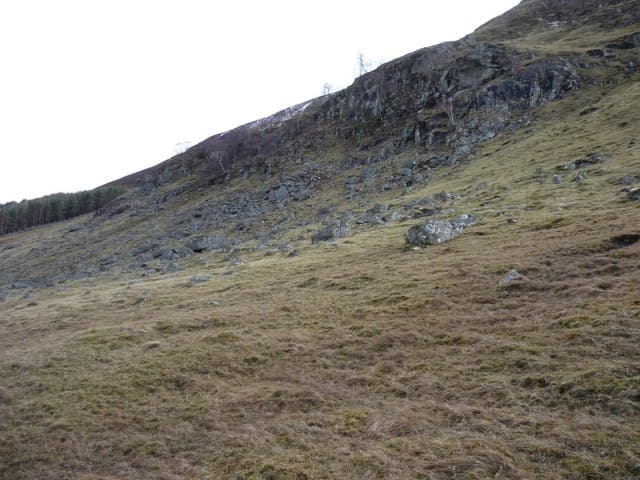
Glen Lyon runs west from Fortingall for 56 kilometres, gradually narrowing from a broad agricultural valley into a tight defile before ending at the Loch Lyon dam. It is the longest enclosed glen in Scotland. The diversity of landscape along its length is striking: the lower glen is green and farmed, with the famous Fortingall Yew in its churchyard and the wide River Lyon winding through flood meadows; the middle glen tightens around Bridge of Balgie; the upper glen becomes moorland, reservoir and high deer forest.
The Munros on the north side of the glen — Stuchd an Lochain, Meall Buidhe — are rarely busy. Ben Lawers (1214m), the highest Munro in the southern Highlands, is technically accessed from the south via the A827, but the Lyon gives access to its quieter flanks. The glen road is single-track throughout and becomes very narrow beyond Bridge of Balgie — the inner glen in particular is unsuitable for anything larger than a standard car. There is no through-route: you must return the way you came, or take the single high pass road over to Killin.
The road in
Single-track road etiquette
Pull into passing places to let oncoming vehicles pass. Don't park in passing places. If a faster vehicle is behind you, pull over and let them past. Do not reverse at speed — wait in a passing place.
End of road
Loch Lyon dam. The road follows the north side of the reservoir to the dam head.
Parking2 spots
Fortingall car park
20 cars
Free
Village with famous yew tree.
Bridge of Balgie
15 cars
Free
Hills from Glen Lyon13 Munros · 4 Corbetts · 1 Grahams
Meall Garbh
1123.1m
An Stuc
1117.1m
Meall Greigh
1000.7m
Meall a' Choire Leith
925.6m
Ben Lawers
1214.3m
Carn Gorm
1029.5m
Meall Corranaich
1067.2m
Beinn Ghlas
1103.4m
Beinn Dearg
830m
Meall nam Maigheach
778.9m
Meall Garbh
967.5m
Meall na Aighean
982.1m
Carn Mairg
1043m
Meall a' Mhuic
745.9m
Meall nan Tarmachan
1043.6m
Drummond Hill
460m
Beinn nan Oighreag
909.6m
Cam Chreag
861.7m
Schiehallion
1083.3m
Gravel cycling2 routes nearby
What's in the glen
Fortingall Yew
The Fortingall Yew is reputedly the oldest tree in Europe — estimated between 2,000 and 9,000 years old. It stands in the churchyard of the small village of Fortingall at the entrance to the glen. Female flowers were observed on one branch in 2015 — the tree is changing sex.
Meggernie Castle
Meggernie Castle stands at the mid-point of the glen — a 16th-century tower house extended into a shooting lodge. It is a private residence. The glen road passes within sight of it.
River Lyon
Our take
Glen Lyon is the Perthshire glen that most people have never heard of and almost none visit properly. The drive the full length is worth doing once: take a full day, stop at the Fortingall Yew, have lunch at the Bridge of Balgie tearoom, and drive to the dam. The inner glen has a quality of quiet that is harder and harder to find. Don't take a motorhome beyond the lower glen — the road does not forgive mistakes and there is nowhere to turn.
History
Glen Lyon is the longest enclosed glen in Scotland — a 55km Highland corridor running from Loch Tay to the high ground above Loch Lyon. Its remoteness preserved an unusual concentration of pre-historic and early-medieval remains: ring forts at Fortingall, the Iron Age dùn on the south side of the glen, the carved stones of the old Fortingall churchyard, and the Fortingall Yew — one of the oldest trees in Europe, dated by tree-ring analysis to between 2,000 and 5,000 years old.
The glen is the historic territory of Clan Campbell of Glenlyon and the MacGregors. The 1692 Glencoe massacre was carried out under the orders of Robert Campbell of Glenlyon — a fact still remembered locally. The hydro scheme at Loch Lyon (the Breadalbane Scheme) was built between 1957 and 1961 and transformed the upper glen, raising water levels and submerging the old township of Pubil. The drowned road and ruined farms remain visible at low water. The Allt Conait pass at the head of the glen is the historic drovers' route across to Rannoch.
Practical
- Mobile signal
- Signal in the lower glen. Nothing beyond Bridge of Balgie.
- Midges
- Moderate(3/5)
- Stalking estate
- Multiple private estates along the glen
- Public transport
- No public transport. Private vehicle essential.
- Dogs
- On lead — livestock or ground-nesting birds present.
Map
Hills (green), bothies (brown), parking (blue), wild swimming (light blue), landmarks (dark red).
Nearby glens
Scotland outdoor updates
Route guides, condition reports and seasonal picks — once a month, no noise.
Glen Lyon — common questions
- How's the drive into Glen Lyon?
- Single-track with passing places. Loch Lyon dam. The road follows the north side of the reservoir to the dam head.
- Can you drive a campervan into Glen Lyon?
- Yes, motorhomes and campervans manage Glen Lyon fine. Drive single-track sections with care and pull into passing places to let local traffic through.
- Will midges be a problem in Glen Lyon?
- We rate Glen Lyon 3/5 for midges — significant between late May and September. Still, humid evenings are peak biting time; wind and height are your friends. Pack Smidge and a head net from May.
- Is it legal to wild camp in Glen Lyon?
- Yes. Under the Land Reform Act 2003 you can wild camp on most unenclosed land in Scotland, provided you follow the Scottish Outdoor Access Code — keep off enclosed farmland, camp in small groups, and leave no trace. Glen Lyon sits outside the Loch Lomond and Trossachs Camping Management Zones, so the March-September permit restrictions there don't apply here.
- How do I reach Glen Lyon by public transport?
- No public transport. Private vehicle essential.