Corbett · Arrochar & Trossachs
The Cobbler (Ben Arthur)
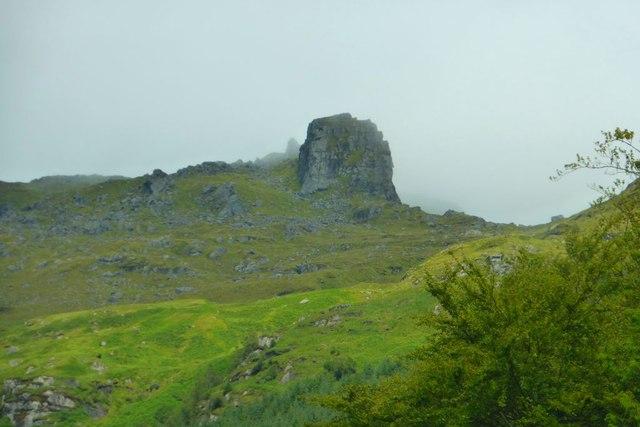
The Cobbler — formally Ben Arthur — is the most recognisable mountain in the Arrochar Alps and probably the most-photographed Corbett in Scotland. The 884m peak has three distinct rocky tops: the north, south and central peaks. The highest point is the central peak, a summit boulder reached by scrambling through a hole in the rock, known as 'the eye of the needle', and onto an exposed ledge. The hill stands above the head of Loch Long near Arrochar and is the local Glasgow climber's classic short day — close enough for an evening ascent from the city, dramatic enough to feel like a real mountain.
Quick facts
- Height
- 884m/ 2900ft
- Prominence
- 256 m
- Distance
- ~11 km
- Ascent
- ~880 m
- Time
- 3–6 hrs
- Grid ref
- NN259058
- Parking
- NN294049
- Nearest city
- Oban· 47km
- Dogs
- Dogs on lead required near livestockDog-friendly guide ↗
Planning the walk? Read the full Cobbler (Ben Arthur) guide — routes, scramble options and logistics.
Height and prominence cross-checked against the Database of British and Irish Hills (CC BY).
No GPX track yet
Walked this route? Share your track to help other walkers.
Standard route
forest track 20% · stone path 45% · rocky scramble 25% · open hillside 10%
Park at the Succoth car park on Loch Long (NN294049) — pay-and-display, often full at weekends. Cross the road and pick up the well-built path that zigzags up through forestry onto the open hillside. The path climbs steadily into the broad corrie below the three summits. The true summit is the central peak, where the final move goes through the eye of the needle and onto an exposed ledge on top of the summit boulder. Allow 4.5–5.5 hours.
Terrain
Forestry track for the first kilometre, then a long pitched stone zigzag path. The path is excellent in dry weather and slippery when wet. Above the path the corrie is grass and scree; the summit area is loose blocks and slabs. The eye-of-the-needle move onto the summit boulder is short but exposed, and there is little room on top.
In winter
Full winter conditions are common on the upper Cobbler from December through March. The pitched path freezes into a continuous ice ramp; the summit scramble becomes a serious mountaineering proposition under verglas, with a fall off the summit block having severe consequences. Crampons and ice axe are essential; the through-hole route is rarely attempted in full winter without rope work. Many parties stop at the central peak in winter.
Kit for this: the winter Munro kit list · which boots take crampons
Best time of year
Getting there
- Glasgow1h 0m
- Edinburgh2h 45m
OS maps: OS Explorer 364, OS Landranger 56
Mobile signal: Poor on approach from Succoth; no signal on rocky summit; occasional 1-2 bars on the broad col
Current conditions
Daylight Today
- Sunrise
- 07:39
- Sunset
- 16:27
- Civil dawn
- 06:58
- Civil dusk
- 17:08
NOAA Solar Calculator · 7 November 2026
The Cobbler (Ben Arthur) weather: forecast, wind exposure and winter notes →
Pair with
Curated multi-hill combinations from The Cobbler (Ben Arthur).
On a long-distance route
The Cobbler (Ben Arthur) sits near these named long-distance walks — useful for trail-pack rest days or section extensions.
Around The Cobbler (Ben Arthur) on the SCOT network
Getting there, basing yourself, and what to do off the hill.
The Cobbler (Ben Arthur) — common questions
- How hard is The Cobbler (Ben Arthur)?
- We grade The Cobbler (Ben Arthur) at 3/5, which puts it in moderately challenging territory. The usual route is around 11km with 880m of climbing; allow 3-6 hours. Terrain: Forestry track for the first kilometre, then a long pitched stone zigzag path.
- How prominent is The Cobbler (Ben Arthur)?
- The Cobbler (Ben Arthur) has 256m of topographic prominence — the height of its summit above the highest col connecting it to higher ground.
- Where should I park to climb The Cobbler (Ben Arthur)?
- Standard parking is at NN294049. Check the parking grid reference on an OS map before travel; informal laybys can fill on summer weekends.
- When should I climb The Cobbler (Ben Arthur)?
- The standard good-weather months for The Cobbler (Ben Arthur) are April, May, June, September, October. Outside those months, expect winter conditions on the high ground — full mountain kit, navigation skills, and a check of the SAIS avalanche forecast for the relevant region.
- Can I bring my dog up The Cobbler (Ben Arthur)?
- On a lead only — the route crosses ground with livestock or nesting-bird interest.
- What's mobile reception like on The Cobbler (Ben Arthur)?
- Poor on approach from Succoth; no signal on rocky summit; occasional 1-2 bars on the broad col
- Is The Cobbler (Ben Arthur) safe in winter?
- Full winter conditions are common on the upper Cobbler from December through March. The pitched path freezes into a continuous ice ramp; the summit scramble becomes a serious mountaineering proposition under verglas, with a fall off the summit block having severe consequences. Crampons and ice axe are essential; the through-hole route is rarely attempted in full winter without rope work. Many parties stop at the central peak in winter.
Get the OutdoorSCOT weekly
One email a week — new route, hill and bothy guides, seasonal conditions and the odd hard-won lesson. No spam, unsubscribe in one click.