Marilyn · Orkney & Shetland
Valla Field
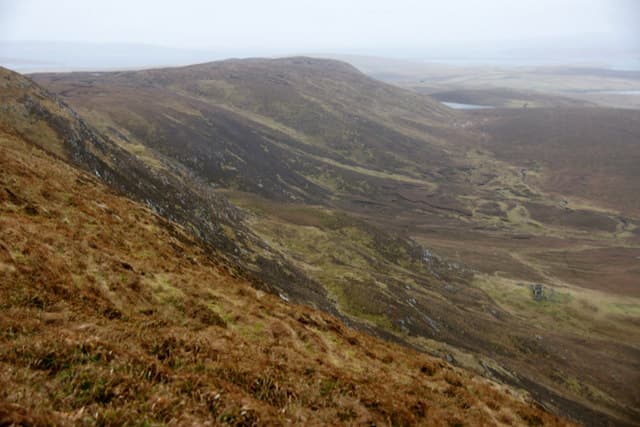
Valla Field is the western Marilyn of Unst, the most northerly inhabited island in Britain. The 216m ridge looks west across Bluemull Sound to Yell and out to the empty Atlantic, with the Hermaness cliffs and Muckle Flugga lighthouse a few miles to the north.
Quick facts
- Height
- 216m/ 709ft
- Prominence
- 201 m
- Grid ref
- HP 58459 07855
- Dogs
- Dogs on lead required near livestockDog-friendly guide ↗
Height and prominence cross-checked against the Database of British and Irish Hills (CC BY).
No GPX track yet
Walked this route? Share your track to help other walkers.
Standard route
blanket bog 55% · heather moorland 30% · rocky summit 15%
Start from the road end at Westing or Lund and follow rough sheep-grazing onto the open hill, then a steady pull up the west ridge to the trig. Pathless throughout but route-finding is simple in clear weather.
Terrain
Wind-clipped heather, peat hags and serpentine rock outcrops give Valla Field a distinctive open character. The serpentine soils support unusual flora — keep to existing tracks where possible.
In winter
Two ferries (to Yell then Unst) make winter visits a project; sailings cancel in big winds. Snow rare, but driven rain and salt spray make a good waterproof essential.
Best time of year
Getting there
- Glasgow15h 18m
- Edinburgh14h 44m
Ferry access
Aberdeen → Lerwick (Shetland)
- Crossing time720 min
- Summer sailingsDaily overnight sailing (Apr–Oct)
- Winter sailingsDaily overnight sailing (Nov–Mar)
- Book ahead14 days
A 12-hour overnight sailing — book a cabin berth. Plan a multi-day Shetland trip; the island is large and the journey is substantial. Flights from Aberdeen/Edinburgh are a faster alternative.
Book on ferry operator ↗OS maps: OS Landranger 1, OS Explorer 470N
Mobile signal: Poor. Little reliable signal; EE fails away from Lerwick.
Current conditions
Daylight Today
- Sunrise
- 06:28
- Sunset
- 19:31
- Civil dawn
- 05:44
- Civil dusk
- 20:15
NOAA Solar Calculator · 14 September 2026
Valla Field — common questions
- Is Valla Field a hard climb?
- Valla Field is rated 1/5 (easy) on the OutdoorSCOT scale. Ground conditions: Wind-clipped heather, peat hags and serpentine rock outcrops give Valla Field a distinctive open character.
- How much drop does Valla Field have?
- The drop is 201m: measured from the summit of Valla Field down to the saddle joining it to higher terrain. Passing the 150m-drop threshold on all sides is exactly what makes it a Marilyn.
- What's the best month to climb Valla Field?
- Aim for March, April, May, June, July, August, September, October on Valla Field. In the remaining months treat it as a winter hill — full kit, solid navigation, and a look at the relevant SAIS avalanche forecast before you go.
- Can dogs go up Valla Field?
- Dogs are fine on a lead. The route passes livestock or ground-nesting bird habitat, so keep them close throughout.
- Will I get phone signal on Valla Field?
- Poor. Little reliable signal; EE fails away from Lerwick.
- How do I get the ferry to Valla Field?
- Aberdeen → Lerwick (Shetland). Daily overnight sailing (Apr–Oct) in summer; Daily overnight sailing (Nov–Mar) in winter. Book at least 14 days ahead. A 12-hour overnight sailing — book a cabin berth. Plan a multi-day Shetland trip; the island is large and the journey is substantial. Flights from Aberdeen/Edinburgh are a faster alternative.
- Is Valla Field safe in winter?
- Two ferries (to Yell then Unst) make winter visits a project; sailings cancel in big winds. Snow rare, but driven rain and salt spray make a good waterproof essential.
Get the OutdoorSCOT weekly
One email a week — new route, hill and bothy guides, seasonal conditions and the odd hard-won lesson. No spam, unsubscribe in one click.